

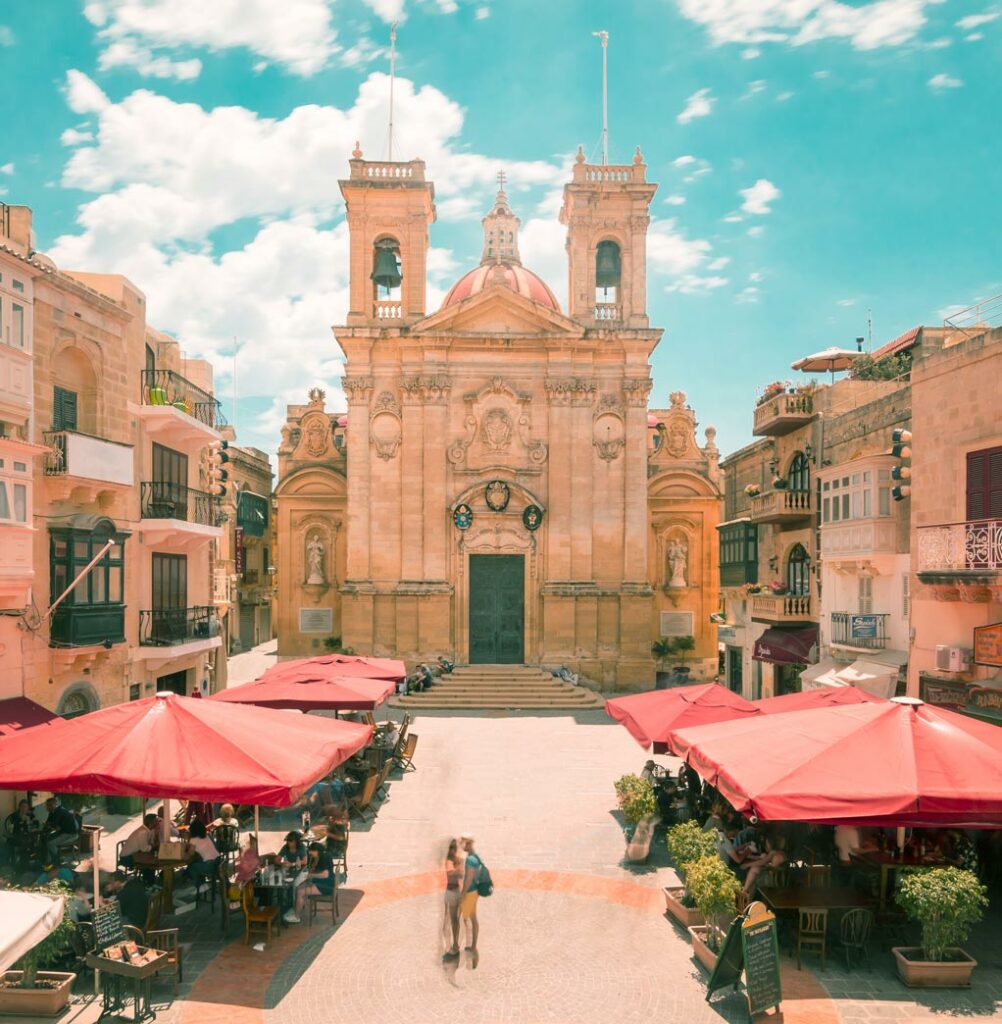

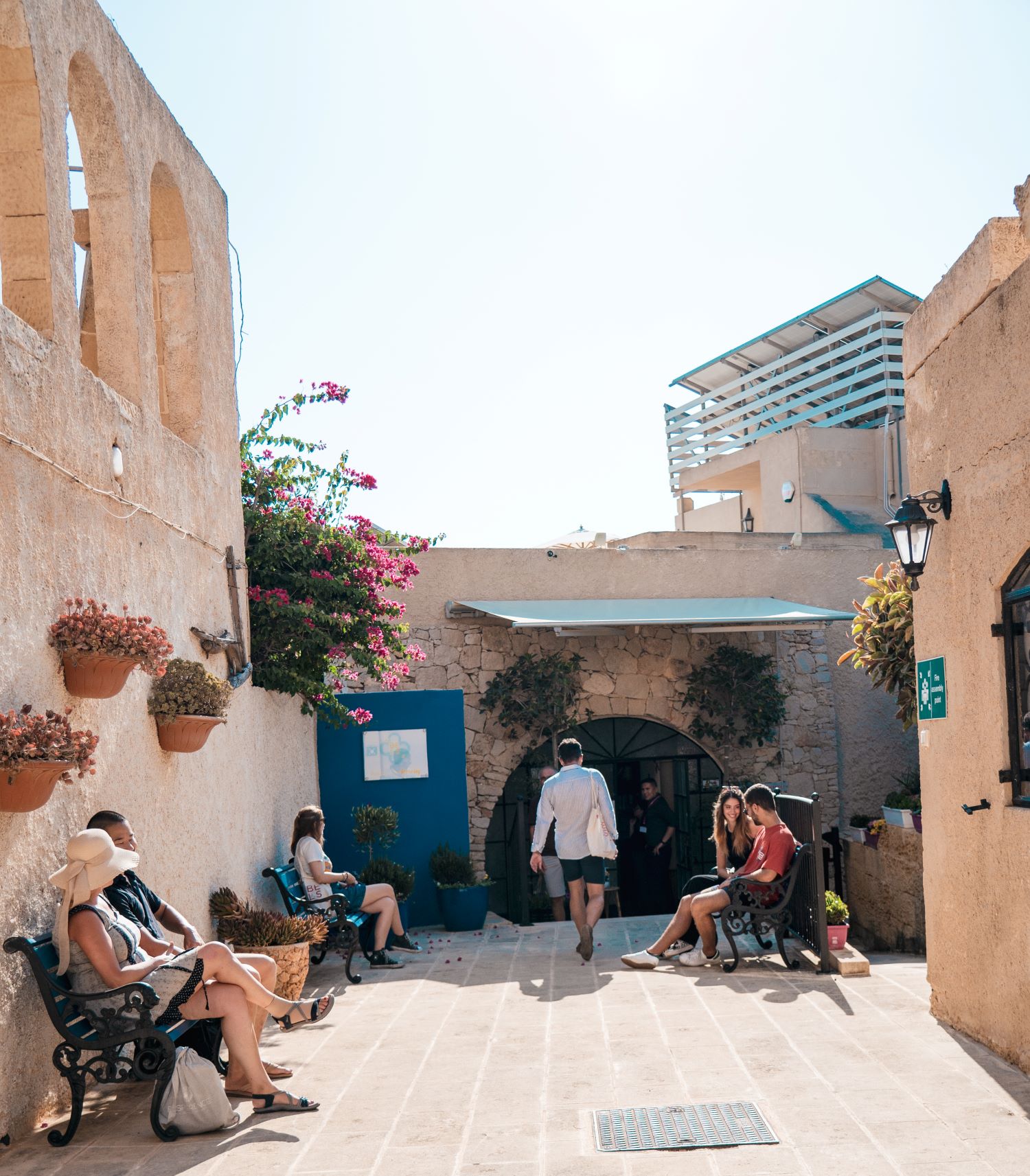



Along the narrow, cobbled street beside St George’s Basilica in Victoria, rises one building that today is known as Il-Ħaġar | Heart of Gozo Museum and Cultural Centre. Having opened its doors over a decade ago, this tranquil space is not simply a repository of beautiful objects. VisitGozo met up with Mr Joseph Borg, a member of the management team, who shared deeper insight into the museum’s vision, heritage and upcoming cultural programme.
Il-Ħaġar was originally conceived as a guardian of collective memory, rooted in a long-standing dream of creating a museum celebrating the heritage of St George’s parish. Mr Borg describes how this dream resonated deeply with many parishioners long before the museum came to be, as evidenced by a framed picture bearing a handwritten inscription recording its donation as far back as 1971.
In 1998, the Fondazzjoni Belt Victoria was established, through the initiative of Mgr Dr Joseph Farrugia and others, with the objective of bringing to the people the long-sought-after vision of a parish museum. This was an important venture, as it needed to safeguard, protect, and preserve the church’s patrimony for future generations. As a foundation, the organisation relied mostly on funds from a crowd-funded initiative and sponsorships. Eventually, support from the European Union made this dream a reality, and in 2013, the museum welcomed its first visitors.
Yet Il-Ħaġar was never conceived simply as a museum. From the beginning, it was envisioned as a living cultural hub where education, dialogue and social interaction could flourish. The project has continued to grow, and today, a mere 13 years down the line, the need for expansion is already being felt to accommodate an ever-growing collection of artefacts and an expanding programme of activities.
“Every artefact carries a memory”, explains Mr Borg, and maybe this phrase encapsulates the ethos of Il-Ħaġar. The collection housed in this museum is an amalgam of donations entrusted by parishioners, families, and individuals who wanted to preserve their patrimony intact for future generations. The collection is further enriched by the donations of artists who, over the years, have exhibited their works in the space.
The most memorable story is the extraordinary gesture made by Prof. Joseph Vella, who donated his entire life’s work, one spanning over sixty years and including 156 original classified compositions. This monumental donation happened on the eve of the composer’s sudden and unexpected death on 25 February 2018. For Mr Borg, this powerful and generous act of Prof. Vella serves as a strong example to other artists who choose cultural preservation over having their artistic, cultural, or musical legacy fragmented through inheritance.
Visiting Il-Ħaġar is about experiencing a multi-level cultural space housing a veritable treasure trove of precious permanent artefacts, alongside an ever-evolving programme of contemporary exhibitions, audio-visual rooms, and an immersive rooftop terrace with an almost cinematic panorama of Victoria with its domes, bastions, and rolling countryside stretching towards the island’s shores.
Once inside, visitors are immediately drawn to the building’s distinctive stone spine, rising vertically through the structure along three storeys like the exposed cross-section of a giant Jenga tower. Each slab is like a marker of time, a story etched in stone, layering legacies of history and standing as a powerful testament to the many civilisations, memories, and narratives that have shaped Gozo through the centuries.
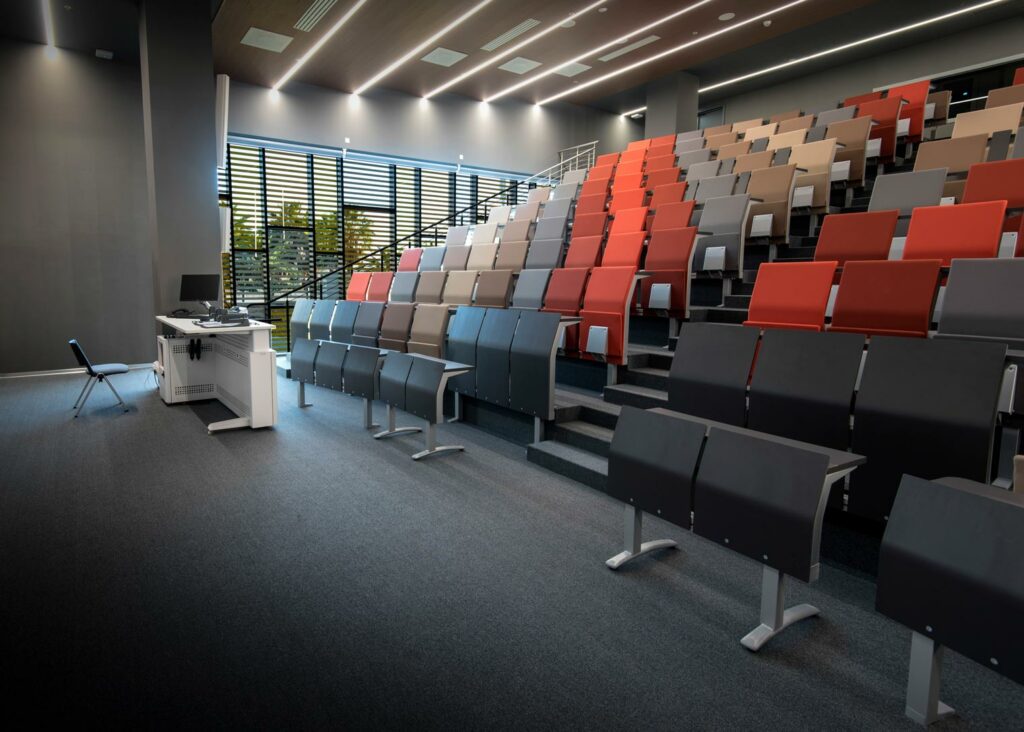
The space is a carefully blended mix of traditional and contemporary elements, with religious artefacts sitting comfortably alongside modern artistic interpretations and temporary exhibits. Mr Borg emphasises that Il-Ħaġar is not a static institution, but one that is alive with activity. He explains that these are not even his words, but this is how prominent individuals who visit describe the experience. Alongside its permanent displays and contemporary exhibitions, Il-Ħaġar hosts lectures, concerts, conferences and educational events throughout the year. Indeed, it has become a cradle of culture where curiosity sparks intrigue and leads deftly towards spaces where knowledge can truly flourish.
This commitment is visible in the museum’s publication of books related to its exhibitions. The Il-Ħaġar Gems series, now in its 39th edition, also feels like it carries a subtle play on the words, as ħaġar in Maltese apart from meaning ‘hewn stone’ can at times refer to precious stones. Much like real jewels, this series stands as a clear indication of the scholarly depth that underpins the museum’s curated events.
Its calendar is overflowing, with exhibitions already booked until 2028, reinforcing the museum’s reputation as a vibrant cultural centre. A palpable sense of quiet energy and renewal fills the space as Mr Borg points out how the museum continually rises to the challenge of hosting new exhibitions and initiatives. Much like the lively rhythm of St. George’s Square itself, to which it is adjacent, Il-Ħaġar hums with activity all year round.
Visitors frequently return because there is always something new unfolding, while regular lectures by both local and international experts sustain a fresh and intellectually engaging atmosphere. Workshops and children’s activities, often led by artists, are organised to ensure direct engagement with younger audiences. A rotating and seasonal cultural calendar further amplifies the programme.
Over the years, Il-Ħaġar has hosted landmark exhibitions by Anton Inglott, Emvin Cremona, Willie Apap, Esprit Borg Barthet, Francesco Zahra, Pawl Carbonaro and Carmelo Mangion. Such prestigious exhibitions drew significant national attention and cemented the museum’s reputation as a serious artistic institution. As an example, the exhibition, marking the 250th anniversary of Zahra’s death, showcased masterpieces, religious works, bozzetti, and portraits by one of Malta’s most influential eighteenth-century artists, and it was a significant moment within Malta’s artistic and cultural circles.
Strong exhibitions continue to define the narrative of Il-Ħaġar, and the upcoming programme will feature distinctive exhibitions dedicated to Giuseppe Briffa, the 800th anniversary of St Francis, and Victor Pasmore. The latter exhibition, centred on the mid-twentieth-century British abstract artist who resided in Malta, will carry the evocative title The Cave of Calypso. Mr Borg goes so far as to say that, as soon as exhibitions are announced, collectors often reach out, offering pieces from their private collections.
While the building’s stone spine is the museum’s defining architectural feature, among the museum’s most remarkable objects on display one finds the suspended silver oil lamp and the silver altar frontal (ventartal) typically of Maltese churches. A more recent addition is the iconic statue of San Ġorġ tal-Ħaġar, a charming roadside statue that has been a landmark on the island for over a century and which was donated to the Museum. The statue recalls the Ħaġar, the old town of Gozo, the ancient community which evolved into the people of Gozo.
For Mr Borg, one of the most remarkable aspects is that despite its highly professional façade, Il-Ħaġar is powered solely by volunteers. Even front-desk duties are handled by a rotating team of around forty individuals. The volunteers include Gozitans, Maltese residents of Gozo, and even expatriates. This itself reflects Il-Ħaġar’s strong communal spirit. In fact, since opening its doors, the museum has won several awards. In 2023, Il-Ħaġar received the prestigious National Cultural Heritage Award from Arts Council Malta, and more recently, it was the winner of the LEADER Cultural Heritage & Promotion Award. It is also the recipient of the Quality Assured Visitor Label of the Malta Tourism Authority.
There is no doubt that Il-Ħaġar reflects Gozo itself. Indeed, it is like a microcosm of the island itself, where the deep-rooted Christian traditions have culminated not only in a unique collective identity but also in a flourishing music and arts scene. Mr Borg succinctly explains that Il-Ħaġar is like a mirror of the Gozitan inventiveness, sharpened perhaps by meagre resources, yet capable of giving birth to remarkable ventures. Gozo’s inventiveness and challenges are reflected in Il-Ħaġar itself, where the dedication of volunteers has sustained a project that might seem impossible elsewhere.
In all of this, the Church’s role as a community builder across the centuries cannot be downplayed. In this sense, the deliberate presence of religious objects displayed throughout Il-Ħaġar Museum helps connect the threads of the island’s history, as they meaningfully point to the faith and devotion that have long shaped Gozitan life.
Visiting Il-Ħaġar Museum is free of charge, although donations are welcome. A visit to this cultural heart of Gozo offers an uplifting and tranquil moment. True to its name, derived from the Maltese expression bi ħġaru — which suggests delight, enthusiasm, and wholehearted enjoyment — every visit unfolds as an engaging experience, embraced with genuine gusto by those who pass through its doors.
Whether for the casual admirer or the seasoned connoisseur, Il-Ħaġar offers an enriching encounter with Gozo’s esprit de corps, encapsulated in the enduring beauty of human creativity.
VisitGozo would like to thank Mr Joseph Borg of Il-Ħaġar Museum for this interview and for kindly sharing the photographs.
BACK TO BLOG POSTS