






The hint of autumn in the air calls for new plans — a yearning for a change from the summer haze. In Gozo, however, the changing season is not so much marked by falling leaves as by the call of its operatic theatres.
As the open-air band concerts associated with the summer feasts leave the stage and the audiences move indoors, the island’s elegant theatres usher in a different season of music and performance.
October is opera season in Gozo, a tradition that now stretches back almost half a century. Over the years, this tradition, nurtured by the strong musical legacy of Victoria’s band clubs, has flourished into an important fixture in Gozo’s cultural calendar and continues to command attention.
Gozo’s opera season is unusual because two historic theatre traditions share the same month, each bringing its own production, creative team, and interpretation to the programme, and taking audiences on two different journeys. This year’s season will open with Giuseppe Verdi’s La Traviata at the Teatru tal-Opra Aurora on 17 October 2026, while Giacomo Puccini’s Madama Butterfly, at Teatru Astra on 29 and 31 October 2026, will bring the season to a close. VisitGozo is keen to share the latest information on the 2026 opera season, directly from the organisers, with performances presented strictly in chronological order.
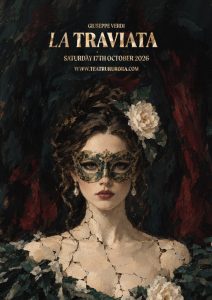
La Traviata, Saturday 17th October 2026, at Teatru tal-Opra Aurora
Answers provided by Mr Matthew Sultana
Principal cast
Violetta: Zuzana Markova
Alfredo: Rame Lahaj
Germont: Dimitris Tiliakos
Flora Bervoix: Andreana Yordanova
Gastone de Letorières: Alan Sciberras
Baron Douphol: Louis Andrew Cassar
Marquis d’Obigny: Noel Galea
Doctor Grenvil: Hidenori Inoue
Annina: Clare Ghigo
Director/conductor: Colin Attard
What makes your production distinctive
This production is designed to recount the story of La Traviata, the victim of a paradox in which the very society that desires her as spectacle cannot tolerate her as a woman. When she presents herself as fantasy — desirable, glamorous, performative — she is celebrated. When she tries to exist as a respectable partner, she becomes intolerable. Respectability becomes a death sentence, because the only way she can obtain it is by renouncing everything that sustains her: her independence, her visibility, her profession, and her sexuality. But that story will be retold in the context of a performance space that is celebrating its golden jubilee. So this will be long remembered as the Traviata of the 50th anniversary, in terms of staging and the way the story will flow.
What audiences can look forward to
As ever, in any opera, audiences should first and foremost look forward to listening to the highest levels of music – orchestra, chorus and singers. No compromise with that. But then, there is also the staging. And staging at the Aurora, be it traditional, be it contemporary, is always bound to create a conversation, which is the whole point in theatre after all. And if Traviata does not start a conversation, which opera will? That’s why, that’s how Verdi created her, and she’ll continue to live up to its name.
One particular scene, aria or aspect of the production you are especially excited
about
I was going to say the Brindisi scene. Then I was going to say the party scene at Flora’s. Then I was going to say the death scene. Then I was going to delete all, and start by saying ‘Musically speaking…’. Then I just decided you can’t be particularly excited about just one scene in a Traviata, because there’s no one without the next. I’m just looking forward to having difficulty in finding a seat for everyone interested in not missing out on this year’s production!
—–
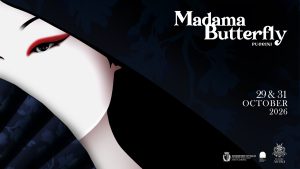
Madama Butterfly, 29 & 31 October 2026 at Teatru Astra
Answers provided by Mr George P. Cassar
Principal cast:
Cio-Cio San (Madama Butterfly): Celine Byrne
Benjamin F. Pinkerton: Leonardo Caimi
Suzuki: Sanja Anastasia
Sharpless: Vladimir Stoyanov
Director/conductor: John Galea
What makes your production distinctive
This production of Madama Butterfly at Teatru Astra, directed by Enrico Stinchelli with designs by Matteo Capobianco, sets out to offer a fresh perspective on one of the most frequently staged works in the operatic repertoire. Recognising the difficulty of achieving originality with so familiar a piece, the creative team relies on the considered use of light, colour and movement to generate distinctive visual and dramatic effects. These elements are intended to heighten the contrasts, tensions and intimate moments of the opera, lending the production a visually striking character that distinguishes it from more conventional stagings, whilst remaining faithful to the essence of Puccini’s work.
What audiences can look forward to
The audience is invited not merely to observe Madama Butterfly but to be drawn into Cio-Cio-San’s inner world, one of great beauty and delicacy that gradually gives way to isolation and tragedy. The production follows the opera’s emotional trajectory, from the brightness of Butterfly’s arrival, through the protracted vigil beneath the moonlight, to her devastating final awakening, with light, colour and movement evolving in tandem with her changing hopes and illusions. The overarching aim is to offer a rediscovery of the emotional power of Puccini’s masterpiece.
One particular scene, aria or aspect of the production you are especially excited about
Two scenes are singled out as especially anticipated: Butterfly’s night-long vigil (the famous humming chorus scene), in which the passage of time and the imperceptible arrival of dawn embody the universal experience of waiting for a dream that reality ultimately cannot sustain; and the final scene, Con onor muore, in which Butterfly’s death is presented not as an act of despair but as a reclamation of her dignity. It is very interesting how these two moments will be connected visually and dramatically, tracing the movement from hope to knowledge, from illusion to truth, and from a fragile dream to the courage required to relinquish it, thereby encapsulating the tragedy of the opera as a whole.
——
More Music and Opera
While Gozo’s opera month is about opera representations, October promises more. On 4th October, the Ewfonija Grand Operatic Concert will herald the month at Villa Fiorita, Żebbuġ. On 8 October, you can attend a piano recital at Aula Mgr. G. Farrugia, Victoria, featuring composers like Verdi and Wagner. On 11th October, Teatru Astra will hold Showcasing Tomorrow’s Performers, and from 18 October – 1 November, The Scenographer’s Opera, an Exhibition celebrating Joseph Cauchi’s 30-year journey as an opera scenographer.
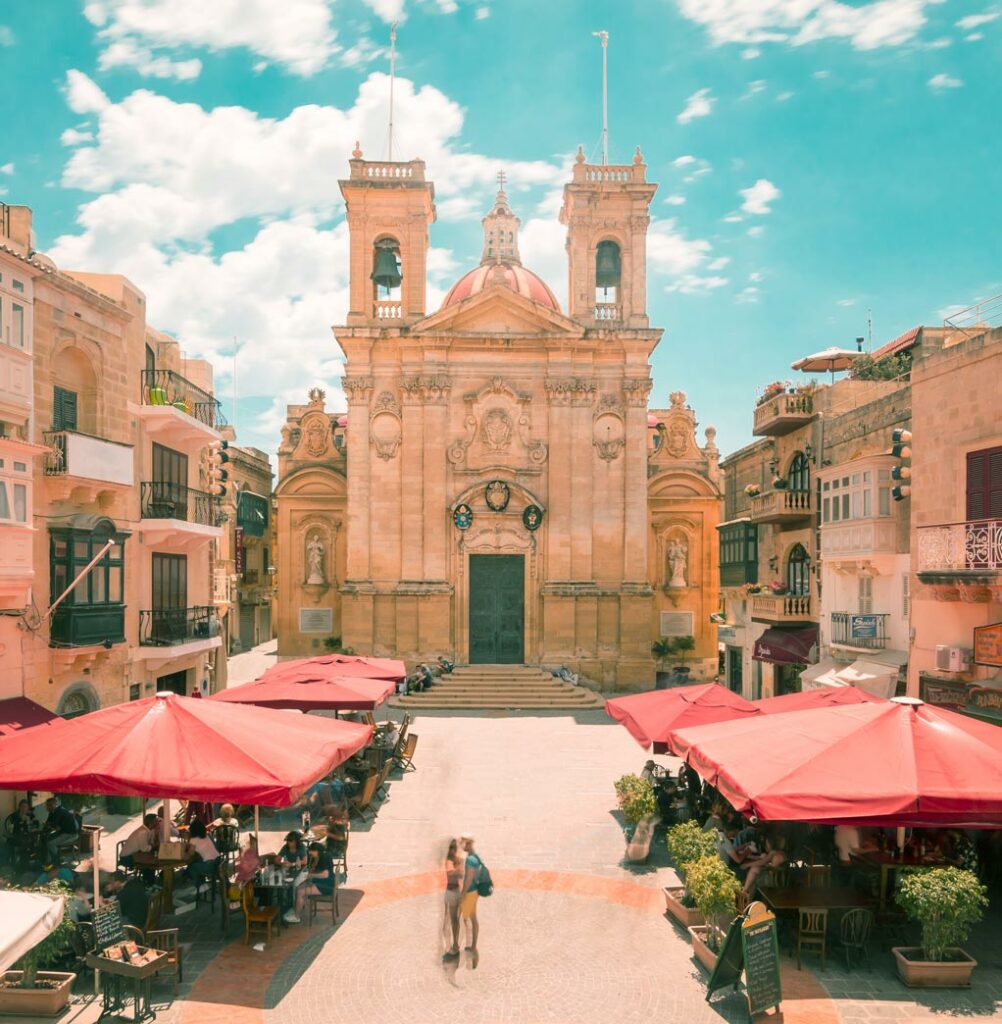
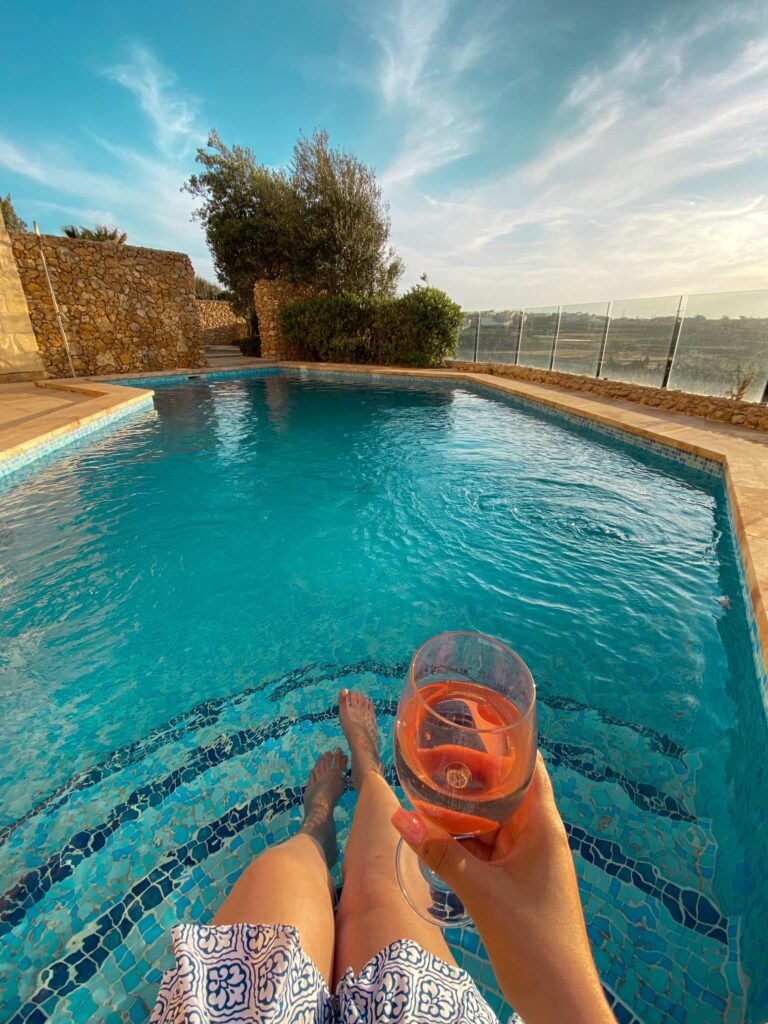
And if the opera is an excuse to visit Gozo, planning an overnight stay, a weekend break, or an extended mid-season holiday can turn it into an indulgent autumn Gozo gateway for opera lovers. An evening at the theatre is more than a glamorous outing with loved ones or friends. Book your overnight stay at one of Gozo’s boutique hotels. Whether in the countryside or in the heart of the city, maybe even a few steps or streets away from the theatres, an extended stay pre- or post-opera means waking up to slow mornings and relaxed breakfasts, the opportunity to indulge in some outdoor activity and maybe even an afternoon at the beach or by the pool. Combine your cultural stay with relaxation and good food, and Gozo becomes an autumn escape and not only an authentic opera destination.
Visit Gozo would like to thank Mr George P. Cassar from Teatru Astra and Mr Matthew Sultana from Teatru tal-Opra Aurora for sharing their insights and taking the time to answer our questions about this year’s opera productions.
BACK TO BLOG POSTS